
*Design target for technology in development. Sample-to-result time has not yet been established through completed clinical validation or regulatory review.
Three Ways to Engage with GLIA
Select the pathway that best describes you — we'll pre-fill the enquiry form so you can reach the right conversation faster.
mTBI and concussion remain difficult to assess objectively — particularly when structural imaging is normal.
TBI affects over 69 million people globally each year. Clinical assessment remains central to diagnosis, while CT is used principally to identify structural injury rather than diagnose concussion. Objective biological tools that can operate closer to the patient remain an important unmet need.
Clinicians on sports sidelines, military medics in the field and emergency physicians in regional hospitals may need to make important decisions without access to rapid, objective biological information. GLIA is being developed to help address that gap.
How It Works
Collect
Designed for PoC use without dependence on specialised central laboratory infrastructure.
Analyse
GLIA's proprietary platform is being developed to detect and quantify miRNA biomarkers associated with brain injury.
Know
Target sample-to-result time: approximately 20 minutes.
Potential applications across assessment, triage, prognosis and longitudinal recovery monitoring, subject to further clinical validation and regulatory clearance.
For sport and defence settings, GLIA is being developed to provide objective biological information that may complement clinical concussion assessment and future return-to-activity (RTA) decision-making.
Grounded in Rigorous Molecular Science
GLIA's platform combines molecular biomarker research with pragmatic engineering to develop a tool intended to operate where and when it matters most — at the point of care.
Clinical Studies Completed
Five clinical studies completed, including four peer-reviewed publications, with further validation research planned or underway.⁹⁻¹²
Proprietary miRNA Biomarkers
Seven proprietary candidate miRNA biomarkers supported by clinical research across acute TBI, mTBI and longitudinal recovery cohorts. The panel is being investigated as a complementary molecular approach with potential utility across injury assessment, prognosis and recovery monitoring. The intended test does not rely on an individual pre-injury biomarker baseline.
PoC Platform
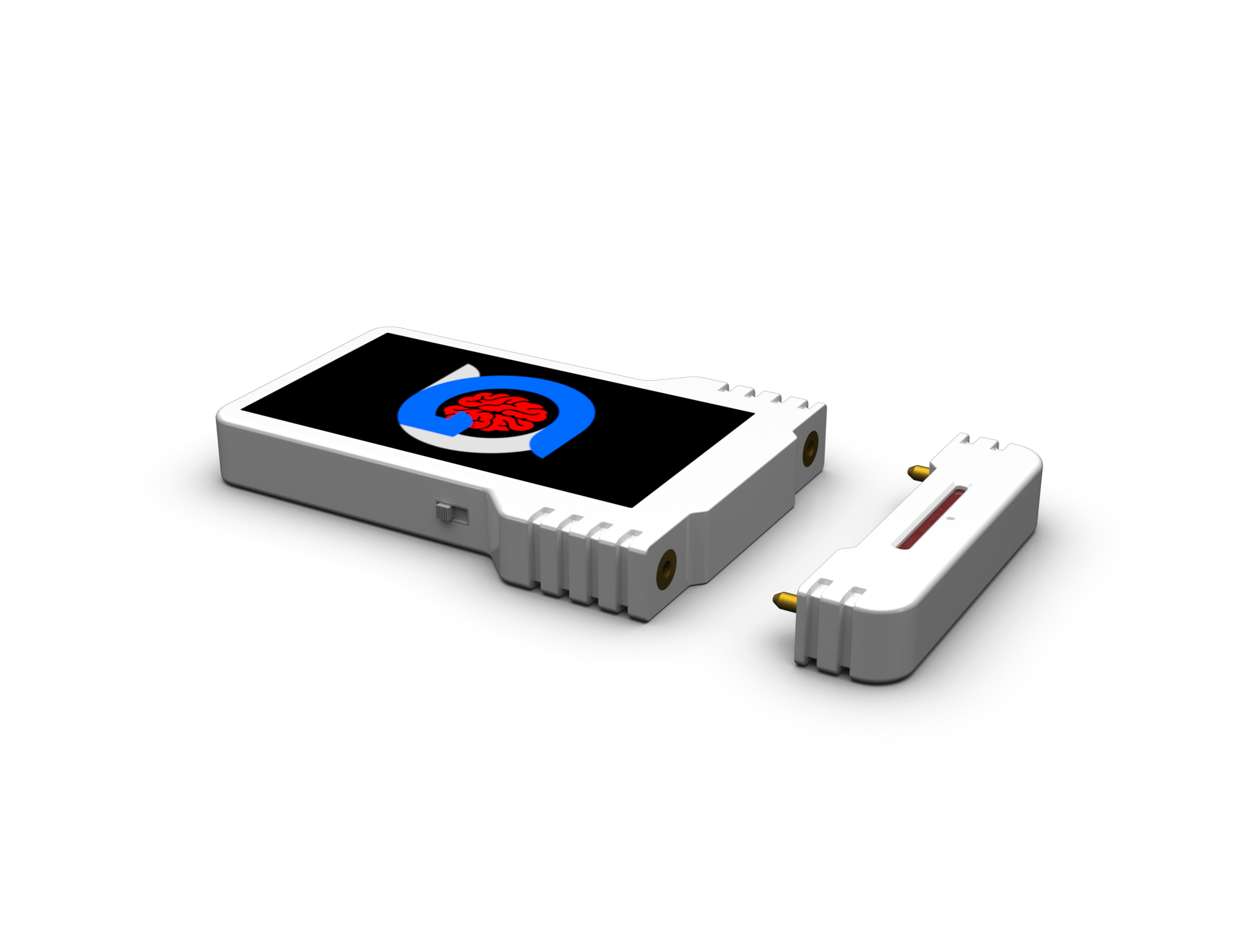
A compact handheld reader and single-use disposable cartridge are being developed to translate GLIA's earlier electrochemical proof-of-concept into an integrated PoC system. Whole-blood qualification and progression toward the intended fingerstick workflow form part of the development pathway.
Regulatory Pathway
GLIA has completed an independent regulatory strategy review and is preparing for FDA Pre-Submission engagement to confirm intended use, predicate suitability, validation requirements and the appropriate regulatory pathway. Australian and European pathways will be progressed under the TGA framework and EU IVDR respectively.
Building a Body of Evidence
GLIA's platform is grounded in rigorous clinical research. An earlier electrochemical proof-of-concept demonstrated correlation with laboratory polymerase chain reaction (PCR) measurements. GLIA is now translating that work into an integrated handheld minimum viable product (MVP) and a manufacturable disposable cartridge. Further validation studies are planned or being developed across US biobank, defence and professional sport settings. We are assembling the data required to support regulatory submission and clinical adoption across the settings where TBI care matters most.
Clinical Studies
Five clinical studies completed, including acute TBI, mTBI and longitudinal recovery cohorts, with four peer-reviewed publications and further validation research planned or underway.
Peer-Reviewed Publications
Published and ongoing research evaluating the biological rationale and diagnostic/prognostic performance of our miRNA biomarker panel.
Proprietary Biomarkers
Candidate miRNA signatures selected based on observed associations with brain injury and biological relevance.
Plasma micro-RNA biomarkers for diagnosis and prognosis after traumatic brain injury: A pilot study.
Micro-RNA levels and symptom profile after mild traumatic brain injury: A longitudinal cohort study.
MicroRNA biomarkers for diagnosis of mild traumatic brain injury and prediction of persistent symptoms: A prospective cohort study.
MicroRNA Biomarkers on Day of Injury Among Patients with Post Concussive Symptoms at 28-Days: A Prospective Cohort Study.
Advancing From Research to Point of Care
Advancing GLIA's clinically studied miRNA biomarkers toward an integrated investigational PoC platform.
- 01Biomarker DiscoveryClinical research and peer-reviewed publications.
- 02Proof of ConceptElectrochemical demonstration of correlation with laboratory PCR.
- 03IP Portfolio & Regulatory StrategyEstablished.
- 04Defence Research EngagementCompleted and ongoing defence-supported research activities.
- 01Integrated MVP DevelopmentCombining reader and cartridge.
- 02Cartridge & Assay IntegrationManufacturability and assay integration.
- 03Analytical ValidationLaboratory correlation underway.
- 04Sporting & Defence PartnershipsFormalise partnerships.
- 01FDA Pre-SubmissionTo align on the regulatory pathway.
- 02Clinical ValidationStudies in target populations.
- 03Regulatory SubmissionFor market authorisation.
- 04Scale-Up ManufacturingFor commercial readiness.
Roadmap reflects current priorities and may evolve based on technical, clinical, and regulatory developments.
Partnering with healthcare, defence, sport and industry to bring objective TBI diagnostics to the PoC.
Momentum From Research to Market
GLIA is currently seeking:
- Clinical and biobank partners for validation studies
- Strategic medtech and manufacturing collaborators
- Defence and sports organisations for future field studies
- Investors to support MVP completion and regulatory readiness
A Defensible Position for Translation
A triple-layer IP strategy: an exclusive worldwide licence covering the foundational miRNA biomarker family, plus two GLIA-owned patent families covering the PoC platform and diagnostic/prognostic methods. Existing protein biomarker tests address an important acute CT-triage need. GLIA is being developed as a complementary miRNA platform with potential applications in diagnosis, prognosis and longitudinal recovery monitoring, subject to further validation and regulatory clearance.
TRL 7 Biomarkers
Biomarker programme assessed at TRL 7; integrated device and cartridge development remain in progress.
Granted Patents
Granted across several jurisdictions covering the foundational biomarker technology.
Proprietary PoC IP
GLIA-owned electrochemical sensing and cartridge IP; PCT application filed with national/regional-phase applications entered in multiple jurisdictions.
MOU and Letters of Support
From multiple sporting codes spanning Australia and the US.
FDA Regulatory Strategy
FDA-cleared blood-based TBI tests provide relevant regulatory precedent. GLIA is preparing for Pre-Submission engagement to confirm its intended use, validation strategy and appropriate pathway.
Three patent families — granted and pending
An exclusive worldwide licence over the foundational miRNA biomarker family, plus two GLIA-owned patent families covering the PoC platform and diagnostic/prognostic methods.
*Unitary Patent covering 17 EU states, plus validated in Czechia, Spain and the UK. In force through 2035.
Covers GLIA's PoC diagnostic platform. Filed 2024; patent term subject to grant, maintenance and applicable national law.
Covers diagnostic and prognostic methods for TBI. Filed 2024; patent term subject to grant, maintenance and applicable national law.
Comparing Today's Technologies
Existing approaches address different aspects of the TBI care pathway, from clinical assessment and structural imaging to acute protein-biomarker testing. GLIA's miRNA PoC platform is being developed with potential utility across acute assessment, prognosis and longitudinal recovery monitoring, including settings where access to centralised diagnostic infrastructure may be limited.
Standard Clinical Assessment
Clinical evaluation incorporating symptoms, clinical signs, cognition, balance and neurological assessment.
- •Central to current concussion assessment and management.
- •Relies in part on patient reporting and clinician interpretation.
- •Does not directly measure the molecular response to injury.
- •Limited ability to objectively characterise longitudinal biological recovery.
Imaging (CT / MRI)
CT is essential for identifying acute intracranial bleeding and other structural injury, but conventional CT and MRI may be normal in mTBI/concussion and are not stand-alone tests for concussion.⁷
- •May be normal in uncomplicated mTBI/concussion and are not stand-alone diagnostic tests for concussion.
- •Typically require hospital or imaging-centre infrastructure and specialist interpretation.
- •MRI is relatively resource-intensive and less suited to rapid decentralised assessment.
- •Access may be limited in rural and remote settings.
Protein biomarker testing — Abbott i-STAT TBI
FDA-cleared handheld PoC test measuring GFAP and UCH-L1 in venous whole blood, intended for adults with suspected mTBI presenting within 24 hours of injury to assist in determining the need for head CT.⁸
- •Abbott's cleared indication is focused on acute CT-triage.
- •GLIA is investigating a different miRNA biomarker panel with potential applications extending into prognosis and longitudinal recovery monitoring.
- •GLIA's intended commercial workflow targets fingerstick whole blood and serial decentralised testing, subject to development and validation.
Oculogica
Adjunct to neurological assessment—not a standalone diagnostic; a positive classification may occur with or without concussion.
- •FDA review states performance was not established in certain ocular conditions, ADHD, or intoxication/drug/alcohol influence.
- •Requires dedicated tabletop eye-tracking hardware and trained, physician-directed use.
- •FDA-cleared for assessment within one week of injury; no explicit FDA-cleared RTP indication.²⁰⁻²²
BrainScope
Portable EEG-based decision-support platform using brain electrical activity, neurocognitive measures and clinical information. FDA-cleared outputs include structural-injury assessment and a Concussion Index for defined patient populations and time windows.
- •Different modality from GLIA's circulating molecular biomarker approach.
- •FDA-cleared Concussion Index is limited to ages 13–25, GCS 15 and assessment within 72 hours; other outputs have different eligibility criteria.
- •Requires a dedicated mobile device and single-use EEG electrode-array headset, with trained-provider use.²³
Disclaimer
Competitor comparisons are based on publicly available information available as of July 2026. Product specifications, capabilities, indications for use, regulatory status, and commercial positioning may have changed since that date. Data has been compiled from publicly available manufacturer publications, regulatory databases, peer-reviewed literature, and company websites.
Company and product names are trademarks of their respective owners. This comparison is provided for general informational purposes only and is not intended to misrepresent, disparage, or imply superiority over any competing product. Readers should refer to the manufacturers' official documentation and applicable regulatory authorities for the most current information. Any comparison reflects GLIA's interpretation of publicly available information and should not be relied upon as a substitute for independent clinical, regulatory, or commercial evaluation.
Alfred Hospital
CSIRO
Genesys
Macquarie University
ADF and US DoD
US professional football organisation
Four Critical Use Settings
Emergency Medicine
Being developed to support rapid triage following head trauma and provide objective biological information that may complement referral and intervention decisions.
Sport & Athletics
Being developed to provide objective biological information at the point of injury that may complement clinical concussion assessment and future RTA decisions.
Military & Defence
Being developed to support future evaluation of rapid assessment following blast or other head-injury exposure, including potential longitudinal monitoring through recovery and return-to-duty.
Regional & Remote/Austere Health
Being developed to bring objective brain-injury testing closer to communities where central laboratory and imaging infrastructure may be hours away.
Future expansion: aged care and community health settings.
Partner With Us
The conditions supporting adoption are strengthening.
- →FDA-cleared blood-based TBI tests provide relevant regulatory precedent.
- →Growing awareness of mTBI and brain health across sport and society.
- →Increased defence focus on blast exposure and Veteran brain health.
- →Growth of women's sport and increasing attention to sex-specific TBI research.
- →Rising demand for rapid diagnostics in regional and remote/austere settings.
Better access for the communities left behind.
Explore the technology.
Or partner with GLIA.
Learn how GLIA’s miRNA biomarker platform is being developed to provide objective TBI information in approximately 20 minutes.
Let's Start a Conversation
Whether you're a clinician, researcher, investor, or industry partner — we'd love to hear from you.